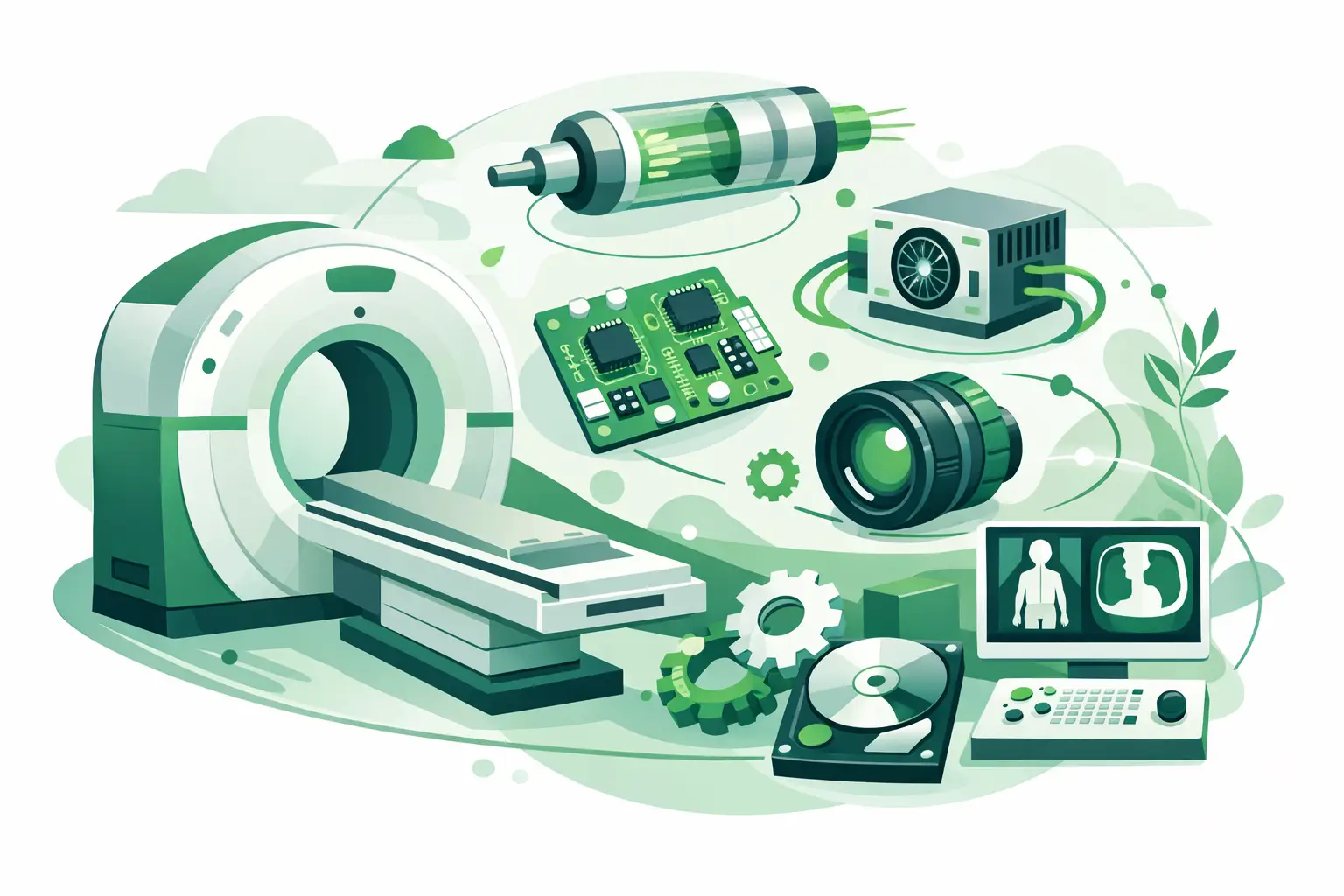
A densitometer does not have to be a high-volume CT or MRI system to create a serious operational problem when it goes down. For facilities that depend on bone density screening, delayed exams can disrupt patient flow, rescheduling, preventive care timelines, and service commitments. That is why sourcing the right bone densitometer replacement parts quickly matters - especially when the system is aging, the OEM support path is limited, or the required component is not something a general medical supplier keeps on the shelf.
Why bone densitometer parts sourcing is different
Bone densitometry systems sit in a category that often gets less attention than larger imaging modalities, but parts procurement can be harder, not easier. Many units remain in service for years because they continue to meet clinical needs, which means buyers are often supporting legacy platforms well past their original sales cycle. When a key assembly fails, the challenge is rarely just finding any part. The real issue is finding the exact match, in the right condition, with enough confidence to install it without creating another service event.
This is where bone densitometer replacement parts differ from standard commodity purchasing. Part numbers may have changed across revisions. Some components are only available through secondary market channels. In some cases, the decision is not simply new versus used. It depends on the part category, the urgency of the repair, the age of the system, and whether the buyer is trying to restore short-term uptime or extend the scanner's service life for several more years.
The parts most likely to affect uptime
Not every densitometer component creates the same level of urgency. Consumables and cosmetic items can usually be planned. Core functional parts are different because they can stop scanning, affect image quality, or prevent the system from completing calibration and startup.
High-priority sourcing requests often involve detector-related assemblies, power supply components, control boards, interface boards, cables, display hardware, positioning components, and accessories tied directly to patient workflow. Some failures are obvious, such as a damaged monitor or a nonresponsive control interface. Others are less straightforward, like intermittent communication faults or calibration instability that traces back to an aging board or internal subsystem.
For buyers managing service risk, the goal is not only to replace what failed. It is to confirm that the replacement part aligns with the equipment revision, software environment, and physical configuration already in the field. A low-cost mismatch can become an expensive delay.
New, refurbished, or hard-to-find - what makes sense?
There is no single right answer for every procurement team. New parts are often preferred when available, particularly for critical electronic assemblies where warranty coverage and service confidence are top priorities. The problem is that new OEM stock may be limited, discontinued, or cost-prohibitive relative to the remaining value of the system.
Refurbished parts can be the practical answer when they come from a knowledgeable source with medical imaging experience and appropriate testing standards. For many older densitometer platforms, refurbished inventory is what keeps the asset viable. The trade-off is that buyers need clear information about condition, compatibility, and availability. A refurbished part that is properly identified and tested is very different from an unverified surplus component.
Hard-to-find parts fall into a separate category. These are the requests that usually drive downtime because the usual purchasing channels come up empty. Legacy boards, discontinued subassemblies, uncommon peripherals, and revision-specific modules often require deeper sourcing through specialist networks rather than standard distribution. In those situations, supplier reach matters as much as inventory.
What technical buyers should verify before ordering
Speed matters, but accuracy matters more. A rushed order for the wrong component can add days or weeks to a repair cycle. For biomedical teams, purchasing departments, and independent service providers, a few verification steps make a measurable difference.
The first is exact part identification. That means confirming the full part number, revision level if applicable, and the equipment model and serial range. On older systems, labeling may be faded or prior service activity may have introduced substituted components, so relying on a partial description alone can create risk.
The second is condition and test status. Buyers should know whether the part is new, refurbished, or used-as-removed, and whether functional testing was performed. For imaging equipment parts, this distinction is not administrative. It directly affects installation confidence and repeat service likelihood.
The third is lead time realism. Some vendors quote quickly but do not actually control the inventory. For urgent repairs, buyers should confirm whether the part is in stock, in procurement, or being sourced from a third party. The difference has a direct impact on downtime planning.
Finally, warranty terms and return conditions should be reviewed before the PO is issued. This is especially important for electronic parts, where return restrictions can be stricter once installation is attempted.
Bone densitometer replacement parts for legacy systems
Legacy equipment is where sourcing complexity usually increases. A densitometer may still be clinically useful and financially sensible to maintain, but once the OEM reduces support, parts availability becomes less predictable. Hospitals and service organizations then face a familiar question: continue supporting the unit or accelerate replacement planning.
In many cases, continued support remains the better operational decision if the right parts partner is in place. A failed board, detector component, cable set, or monitor does not automatically justify replacing the entire system. If the replacement part can be sourced accurately and quickly, the facility may gain additional years of service at a fraction of capital replacement cost.
That said, there are limits. If multiple critical assemblies are becoming scarce at the same time, or if repeated failures indicate broader system instability, procurement strategy needs to account for both immediate repair and medium-term replacement planning. Good sourcing support helps buyers make that call with better information instead of reacting one breakdown at a time.
Why specialized sourcing beats general distribution
General medical suppliers can be useful for routine products, but densitometer parts procurement often requires a different operating model. Technical buyers are not just looking for a catalog item. They need a supplier that can work from part numbers, model details, equipment history, and urgency level without creating unnecessary back-and-forth.
A specialized aftermarket sourcing partner brings three practical advantages. First, there is broader access to nonstandard inventory, including refurbished and discontinued parts. Second, quoting tends to be faster because the supplier understands how imaging parts are identified and cross-checked. Third, the buyer gets support that reflects the realities of service work, where the difference between same-day confirmation and a vague response can determine whether a room stays offline.
This is where a company like Meditegic fits the market. For institutional buyers and service teams, the value is not only in stocking parts. It is in having access to a sourcing network built around difficult imaging components and the operational urgency that comes with equipment downtime.
Building a smarter procurement process
Facilities that manage aging imaging assets usually perform better when densitometer parts purchasing is treated as a process, not a last-minute scramble. That starts with maintaining clean equipment records, including model details, installed options, serial numbers, and prior replacement history. When a failure occurs, those records shorten the path to an accurate quote.
It also helps to identify parts categories that are worth sourcing proactively. If a system is clinically important and parts are becoming less common, keeping a shortlist of high-risk components can reduce future downtime. Not every site will choose to stock spares, but every site benefits from knowing what is hardest to replace before the failure happens.
Supplier selection should also be based on more than unit price. A lower quote has limited value if the part arrives late, fails on installation, or turns out to be the wrong revision. For healthcare providers and service organizations, total downtime cost usually matters more than nominal purchase savings.
What good support looks like when time is tight
When a densitometer is down, buyers need a supplier that communicates clearly and works from verified information. Good support means fast quote turnaround, honest availability status, clear condition disclosure, and enough technical familiarity to flag potential compatibility issues before shipment. It should reduce uncertainty, not add more of it.
That standard matters even more for hard-to-source items. If a part is discontinued or only available through secondary channels, the procurement partner should be able to explain what is available, what is comparable, and where the risk sits. Sometimes the right answer is immediate replacement. Sometimes it is a short wait for a better match. The point is to make that decision with usable facts.
For bone densitometer replacement parts, the best outcomes usually come from combining speed with precision. Facilities do not need inflated promises. They need accurate sourcing, realistic lead times, and a dependable path to restoring uptime. When that support is in place, even older systems can continue delivering value well beyond what many buyers initially expect.
The practical advantage is simple: the right part, identified correctly and sourced through the right channel, keeps a manageable repair from turning into a much larger operational problem.