A PET system can sit idle over a single failed board, detector issue, or power assembly, and the cost of that downtime adds up fast. For teams responsible for uptime, PET scanner replacement components are not a routine purchase. They are often urgent, highly specific, and tied to older platforms where OEM support may be limited, lead times may be unpredictable, and part identification has to be exact.
That reality changes how procurement and service teams should approach sourcing. PET environments are less forgiving than many other imaging categories because performance is directly tied to component integrity, calibration stability, and system compatibility. A part that is technically available is not always a part that is operationally usable.
What makes PET scanner replacement components difficult to source
PET systems combine high-value electronics, detector technologies, cooling elements, gantry subsystems, and control assemblies that vary widely by manufacturer, model, and software generation. Unlike more standardized consumables, replacement parts for these systems often require confirmation at multiple levels - part number, serial compatibility, revision level, and equipment configuration.
The challenge becomes more pronounced with legacy systems. Many hospitals and imaging service groups continue to support installed PET or PET/CT platforms well beyond the point where OEM inventories are broad or predictable. In those cases, buyers are often dealing with discontinued PET scanner replacement components, refurbished-only options, or assemblies that can only be sourced through specialized aftermarket channels.
There is also the issue of urgency. When a PET scanner is down, the consequences affect more than service schedules. Delays can disrupt patient throughput, postpone studies, and create pressure across radiology, nuclear medicine, and procurement teams at the same time. That is why speed matters, but speed without verification creates its own risk.
The components that usually create the most pressure
Not every replacement need carries the same sourcing complexity. Some PET scanner replacement components are difficult because of scarcity, while others are difficult because they demand exact technical matching.
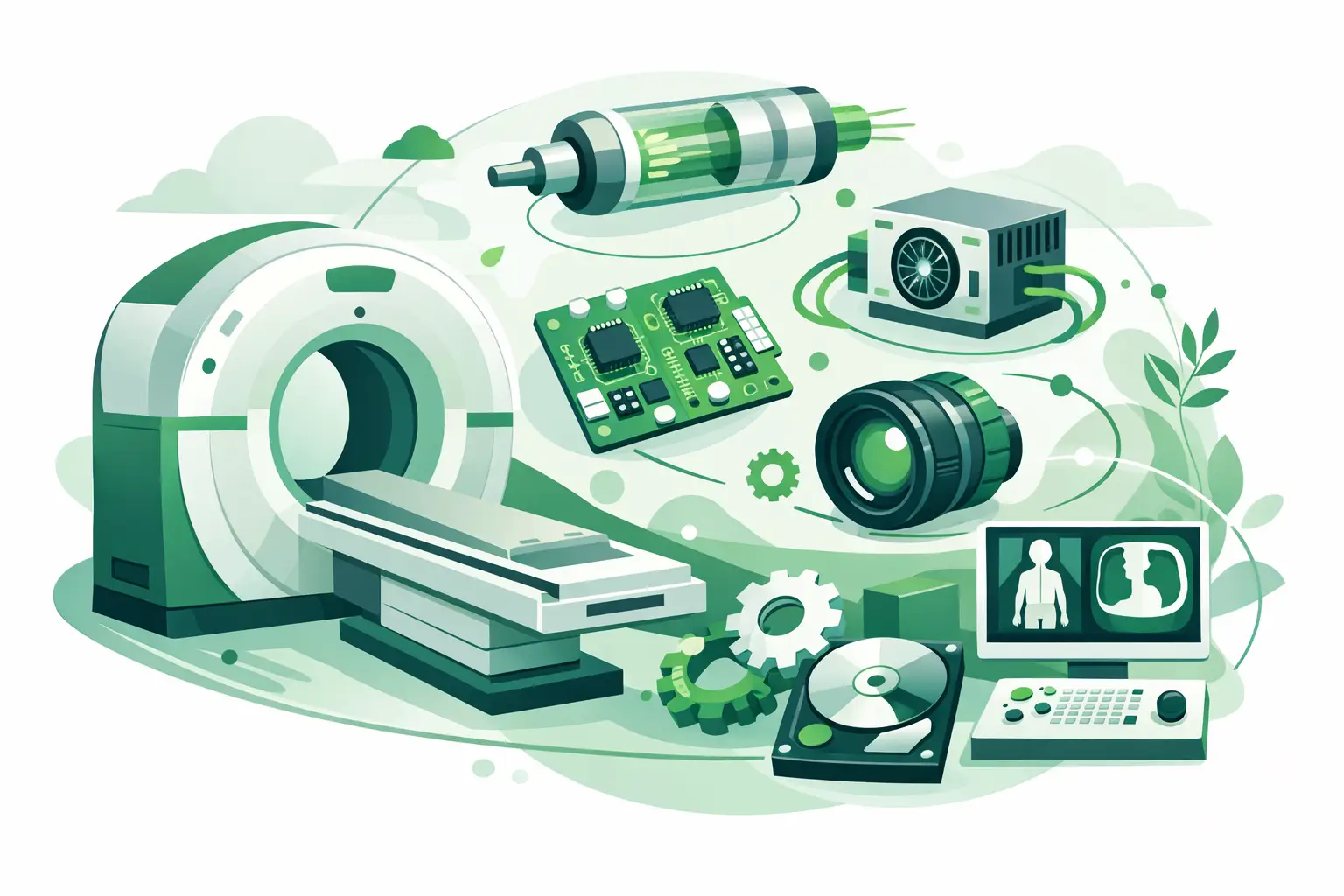
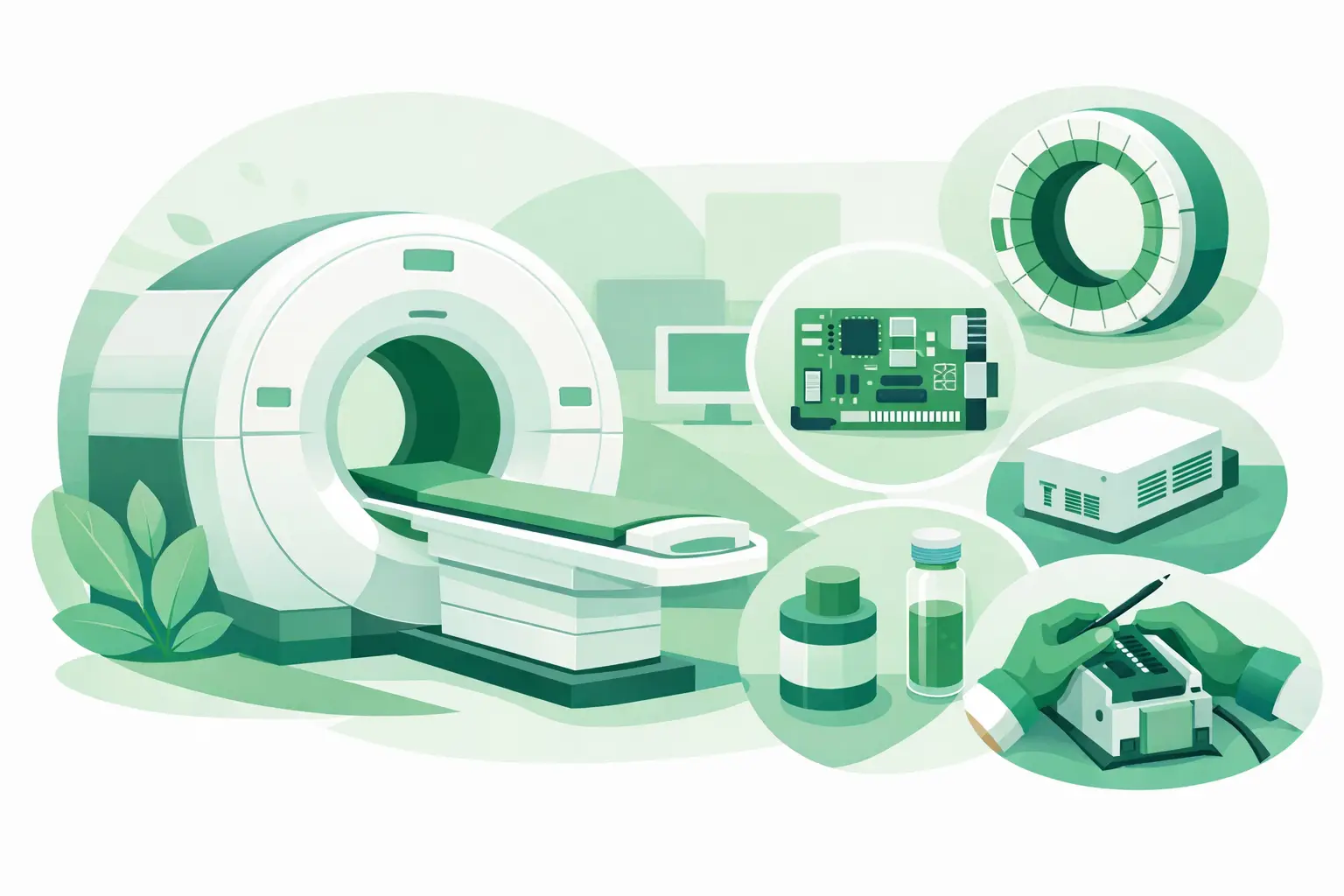
Detector-related parts are a common example. Depending on the system, issues may involve detector modules, block detectors, photomultiplier assemblies, or related electronics. These components directly influence image quality and system performance, so buyers need more than basic availability. They need confidence that the replacement will match system requirements and support stable operation after installation.
Power supplies, interface boards, processing boards, and control electronics also create pressure because failures can bring the system down completely. These parts may look straightforward on paper, but compatibility problems are common when revisions differ. A substitute that appears equivalent may still introduce faults, communication errors, or calibration issues.
Mechanical assemblies matter too. Gantry-related components, motion elements, cooling fans, and internal structural parts can become hard to source, especially for older units. These are not always the most expensive items, but they can be the reason a scanner remains offline.
Why exact part matching matters more than fast part ordering
In imaging service, urgency can push buyers toward the first available source. That approach works poorly with PET. Exact-match sourcing is not administrative overhead. It is the control point that protects service time, budget, and operational continuity.
A part number alone may not be enough. Some PET scanner replacement components require confirmation against the scanner model, serial range, software environment, and prior field modifications. Assemblies may have supersessions, alternate revisions, or manufacturer-specific notes that affect interchangeability. If those details are missed, the replacement process can add days instead of removing them.
This is where experienced sourcing support makes a measurable difference. Technical buyers usually know the problem they are trying to solve, but the sourcing partner still needs to validate the path. The best outcomes come from combining field information with a broad parts database and supplier network, especially when the component is rare or tied to a legacy platform.
New, refurbished, or hard-to-find - the right option depends on the situation
There is no single best purchasing path for PET scanner replacement components. The right choice depends on equipment age, criticality, budget, warranty expectations, and time to restore service.
New parts are often preferred when available because they simplify quality expectations and may align with internal procurement standards. The problem is that availability can be inconsistent for older PET systems, and lead times may not support the urgency of the repair.
Refurbished parts are often the practical option in the imaging aftermarket. For many hospitals, ISOs, and independent service providers, refurbished inventory is what keeps legacy systems viable. The trade-off is that quality control, testing standards, and source reliability matter a great deal more. A refurbished part from a specialist channel can be a strong solution. A loosely verified part from an unknown source can create repeat failures and additional service expense.
Hard-to-find parts sit in a separate category. These are the components that standard distributors do not stock and OEM channels may no longer support in a timely way. In those cases, access to an established network becomes more valuable than catalog breadth. Meditegic operates in that space by helping buyers locate difficult imaging parts across a wide supplier base rather than relying on narrow inventory positions alone.
How procurement teams can reduce downtime risk
The strongest PET parts strategy starts before the next failure. That does not mean carrying deep stock on every possible assembly. It means improving the quality of the sourcing process so urgent events are easier to manage.
First, maintain accurate equipment records. Model details, serial numbers, installed options, and prior replacement history make sourcing faster and more precise. When a failure occurs, that information reduces back-and-forth and helps confirm whether a listed component is truly compatible.
Second, document recurring failures and long-lead items. Over time, many facilities and service organizations see patterns in which PET scanner replacement components fail most often or are hardest to find. Those patterns support better planning, whether that means pre-identifying alternates or keeping a small number of critical parts available.
Third, work with suppliers that understand imaging systems rather than general MRO buying. PET sourcing is not simply a matter of crossing part numbers. It requires familiarity with modality-specific constraints, legacy equipment realities, and the commercial urgency tied to downtime.
What to ask before placing an order
For high-value imaging parts, a quote should answer more than price and availability. Buyers should expect clarity around condition, traceability, and compatibility. If the source cannot explain whether the part is new, refurbished, or harvested, that is already a concern.
It also helps to confirm whether the quoted item is the exact part number requested or an approved alternate. That distinction matters. In some cases, an alternate is acceptable and can speed resolution. In others, especially with PET electronics and detector-related assemblies, even small differences may create unnecessary installation risk.
Lead time language deserves scrutiny as well. "Available" can mean in stock, available through a partner, or potentially obtainable after further confirmation. For a scanner-down situation, those are very different scenarios. Reliable suppliers are clear about the difference because they know service teams are scheduling around that answer.
The aftermarket advantage for PET systems
For many organizations, the aftermarket is not a backup plan. It is the operating model that makes older imaging systems supportable. That is especially true when the installed base includes mixed OEM environments, aging PET/CT assets, or systems where official support has narrowed.
A specialized aftermarket supplier can often provide broader sourcing reach, faster quote turnaround, and better access to discontinued PET scanner replacement components than a generalist channel. That does not remove the need for diligence, but it does improve the odds of finding the right part before downtime becomes a larger operational problem.
The key is choosing a sourcing partner that treats part procurement as a technical service function, not just a transactional sale. In PET, the value is not only in finding a part. It is in finding the correct part quickly enough to matter, with enough verification to avoid doing the job twice.
Keeping a PET system operational often comes down to small decisions made under pressure. When those decisions are backed by accurate part identification, realistic availability, and a supplier that understands imaging complexity, downtime gets shorter and procurement gets a lot less uncertain.